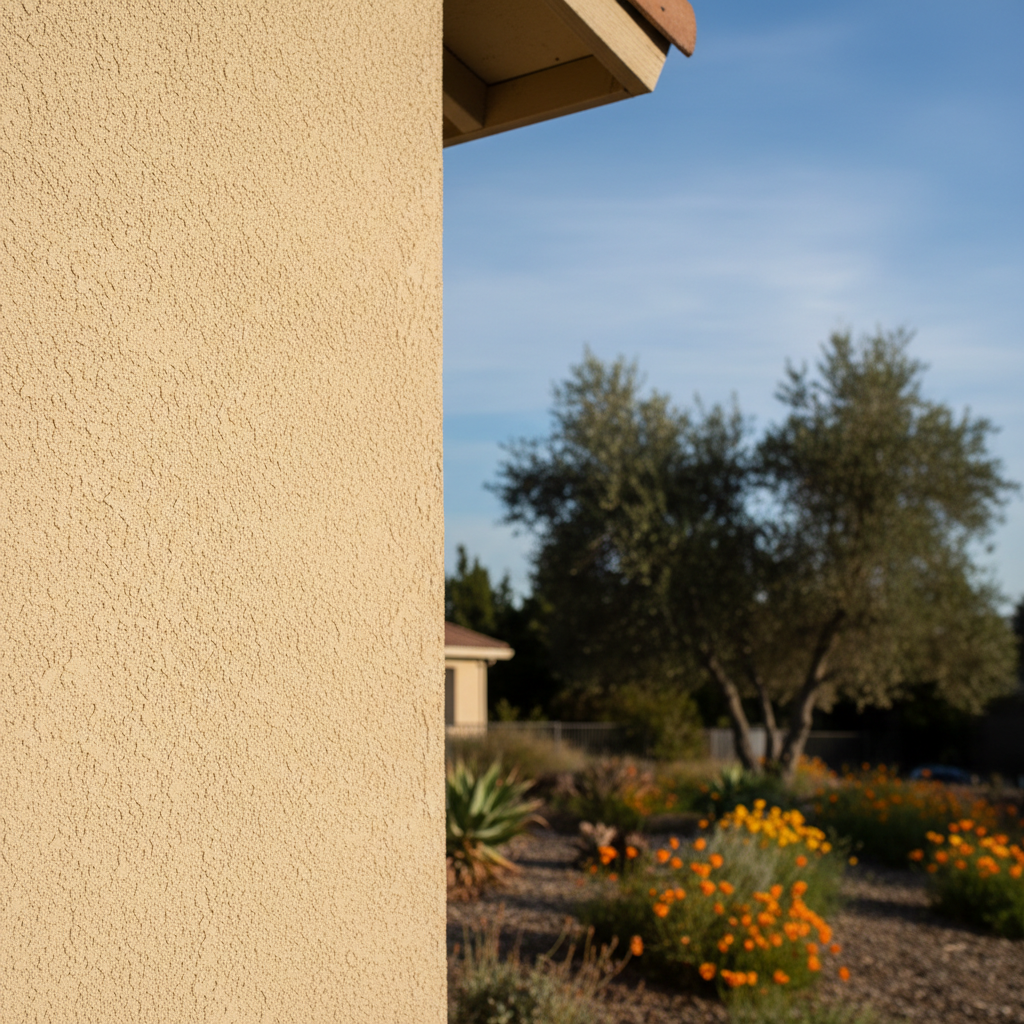
You've got stucco on your house, or maybe you're just thinking about it, and you've probably got questions. I hear 'em all the time, folks asking about this, that, and the other thing when it comes to their home's exterior. So, I figured I'd put together some straight answers to the most common questions I get asked here in Santa Maria. No fancy marketing talk, just what I know from years on the job.
What's the difference between traditional stucco and synthetic stucco (EIFS)?
This is a big one, and it causes a lot of confusion, doesn't it? Traditional stucco, what we usually call 'hard coat' stucco, is made from cement, sand, lime, and water. We apply it in multiple layers over a lath (that's usually metal mesh), and it forms a very hard, durable, breathable shell. It's been around for centuries, and it's what you see on a lot of the older homes in areas like Orcutt. Synthetic stucco, or EIFS (Exterior Insulation and Finish Systems), is different. It's typically a foam insulation board covered with a fiberglass mesh, and then we put a thin, acrylic-based finish coat over that. It's lighter, offers better insulation, and can be more flexible, but it's also a more modern product with its own set of considerations, especially when it comes to managing moisture.
How long does stucco typically last in our Santa Maria climate?
If it's installed right and you take care of it, traditional stucco can last a really long time – I'm talking 50, 75, even 100 years or more. You see it all over town on homes that have been standing for decades. Our climate here in Santa Maria, with its mild temperatures and not a ton of extreme weather, is actually pretty good for stucco. The biggest thing that shortens its life is water getting in from poor flashing around windows or roofs, or cracks that aren't addressed. Synthetic stucco (EIFS) has a slightly different lifespan, usually more in the 30-50 year range, depending on the system and how well it's maintained.
I've got cracks in my stucco. Are they serious, and do I need to fix them right away?
Cracks are probably the most common thing people call me about. But not all cracks are created equal. Hairline cracks, sometimes called spiderweb cracks, are pretty normal. Stucco expands and contracts with temperature changes, and these small cracks often don't go all the way through the system. They're mostly cosmetic, really. However, if you see cracks that are wider than a credit card, or if they're running horizontally or vertically from a window or door corner, or if you can see the lath underneath – those are more serious. They can be a sign of structural movement or, more importantly, they can let water get behind the stucco. Water behind stucco is bad news, leading to dry rot and mold. So, yes, if they're bigger cracks, get 'em looked at sooner rather than later.
Can stucco be repaired, or does it always need to be completely replaced?
Absolutely, stucco can be repaired! In fact, most issues can be fixed with a patch. We match the texture and color as best we can, and if we do it well, you'll barely notice it. Complete replacement is usually only necessary if there's widespread, severe damage, like extensive water damage across a whole wall, or if the stucco is delaminating in large sections. For most homeowners, a good repair is all you need to keep your home looking good and protected. It's a lot less disruptive and way more affordable than tearing everything off and starting fresh.
Is stucco a good choice for energy efficiency in Santa Maria?
Traditional stucco itself isn't a fantastic insulator on its own, but it's a dense material that adds thermal mass to your walls. This means it helps slow down heat transfer, keeping your house cooler in the summer and warmer in the winter by delaying the outside temperature from affecting the inside. When we apply it over good sheathing and combine it with proper insulation in your wall cavities, it contributes to a very energy-efficient building envelope. EIFS, on the other hand, is specifically designed for insulation, with its foam core providing excellent R-value right on the exterior, making it a top choice if energy efficiency is your primary concern.
What causes stucco to get discolored or stained, and how do I clean it?
Discoloration usually comes from a few things. Dirt and dust settle on the surface, especially in areas where rain runs down. Algae or mildew can grow in shaded, damp spots, often showing up as green or black patches. Sometimes, it's efflorescence, which is that white powdery residue from salts leaching out of the masonry or stucco itself. For general dirt and grime, a soft brush and a mild detergent with water often do the trick. For algae or mildew, a diluted bleach solution (one part bleach to three parts water) or a specialized mildew cleaner works well, but always test a small, inconspicuous area first. Rinse thoroughly. For efflorescence, you might need a special masonry cleaner. Just be careful with high-pressure washers; they can damage the stucco surface if you're not experienced. If you're unsure, or it's a big job, give Santa Maria Stucco & Plastering a call, and we can help you out.
Does stucco attract pests like termites or rodents?
Stucco itself isn't a food source for pests, so termites aren't going to eat it like they would wood. However, cracks in stucco, especially near the foundation or around utility penetrations, can provide entry points for insects and rodents. If they can get behind the stucco and into the wall cavity, that's where they can cause problems. So, keeping your stucco well-maintained and free of large cracks is a good defense against pests. Also, make sure any weep screeds at the bottom of your walls aren't buried by landscaping, as these are designed to allow moisture out and can also be an access point if not properly maintained.