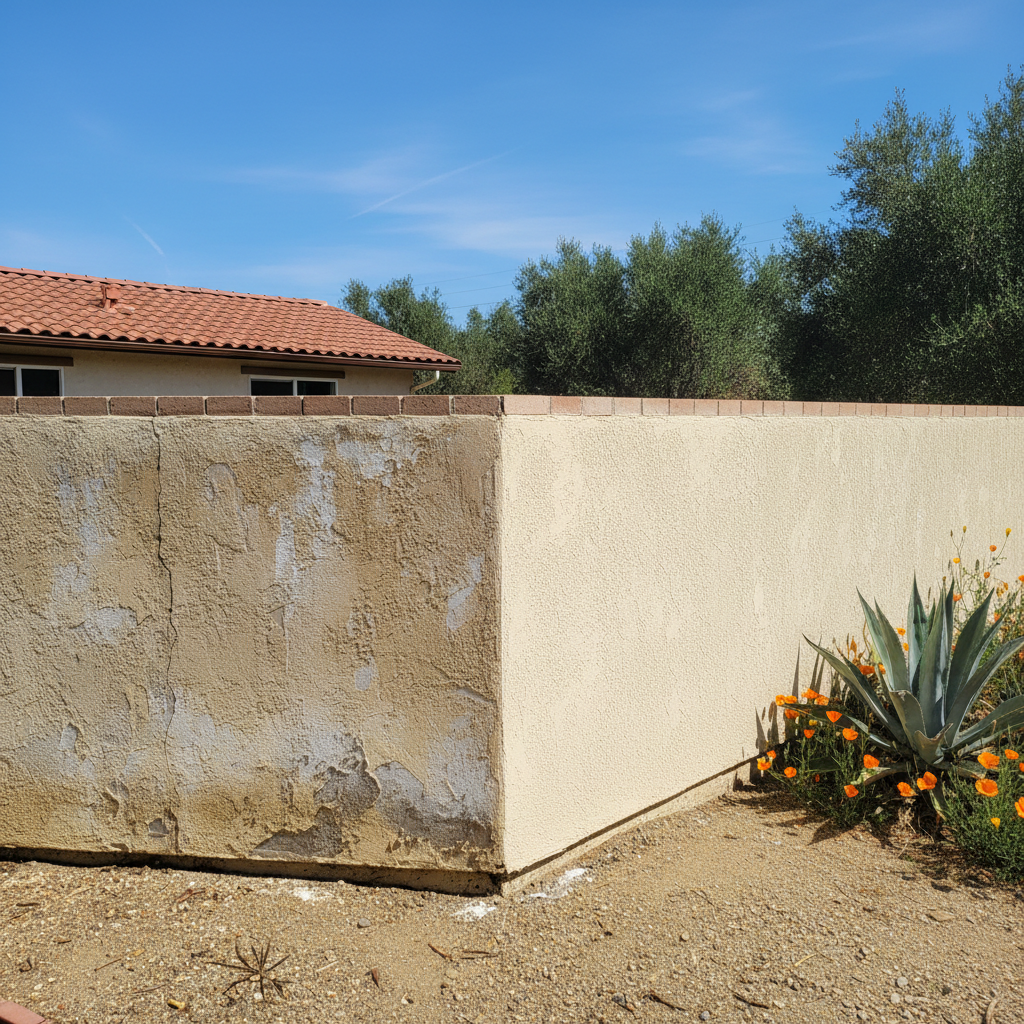
Alright, let's talk about stucco repair. I get calls all the time from folks right here in Santa Maria dealing with cracks, chips, or just general wear and tear on their stucco. When you've got damage, you're usually looking at two main ways to fix it: a targeted patch or a full re-dash. Both have their place, sure, but they're definitely not the same thing. You really need to know the difference before you decide which route to take.
The Quick Fix: Patching Stucco
Patching is exactly what it sounds like. You've got a specific area of damage – maybe a crack, a hole from an old hose bib, or a ding where something hit the wall. We'll go in, clean out the damaged section, apply new stucco material, and then try our very best to match the existing texture and color. It's often the first thing people think of, probably because it seems like the easiest and cheapest option, right?
When Patching Works Best
- Small, isolated damage: If it's just a few hairline cracks or a single impact hole, a patch can absolutely do the trick.
- Budget-friendly: Generally, this is the least expensive option because we're only dealing with a small section of your home. Less material, less labor.
- Quick turnaround: A small patch job can often be done in a day or two, depending on the size and how complicated it is.
The Downsides of Patching
Here's where it gets real. The biggest challenge with patching is matching. Stucco, especially older stucco, weathers over time. The color fades, the texture gets subtle changes. Trying to make a brand-new patch blend perfectly with decades-old stucco is tough, even for the best pros. You'll often end up with what we call a 'scar' – a visible difference in color or texture where the repair was made. It might be subtle, or it might stick out like a sore thumb, especially if your home has a very specific finish like a heavy lace or a sand finish that's hard to replicate perfectly.
Also, if you've got widespread cracking or multiple small areas of damage all over one wall, patching each one individually can actually end up looking worse than leaving it alone. And it won't be much cheaper than a re-dash, either. It's like putting a bunch of band-aids on a rash – it might cover it, but it doesn't really fix the underlying issue or make it look good.
The Full Refresh: Stucco Re-Dashing
Re-dashing, sometimes called re-coating or re-finishing, is a more comprehensive approach. Instead of just fixing a small spot, we're applying a new finish coat of stucco over an entire section or even your whole house. We'll still address any major structural cracks or loose stucco underneath first, of course, but the goal here is to create a uniform, fresh look across the entire surface.
When Re-Dashing is the Smart Move
- Widespread damage: If you've got cracks spiderwebbing across large sections, or if your stucco just generally looks tired, faded, or chalky, a re-dash is going to give you a much better result.
- Improved curb appeal: This is where re-dashing really shines. You get a completely uniform color and texture. It's like giving your house a brand-new skin. This can significantly boost your home's appearance and value.
- Enhanced durability: A new finish coat adds another layer of protection against the elements. Here in Santa Maria, with our coastal fog and occasional strong sun, that extra layer can really help. Plus, we can often incorporate modern stucco systems that offer better crack resistance.
- Your entire wall or home will have a consistent finish. No more patchwork quilt effect.
The Downsides of Re-Dashing
The main drawback is cost. A re-dash is a bigger project, requiring more material and labor, so it's going to be more expensive upfront than a small patch. It also takes longer to complete, usually several days to a week or more, depending on the size of your home. You'll also need to consider things like protecting landscaping and making sure all the details around windows and doors are handled correctly.
My Recommendation for Santa Maria Homeowners
Look, if you've got a single, small, isolated ding that's not too noticeable, a patch might be fine. But for most homeowners I work with, especially those in older neighborhoods like those around the Santa Maria Country Club where homes have seen a few decades of Central Coast weather, a re-dash is almost always the better long-term solution.
Why? Because you're not just fixing a problem; you're upgrading your home's exterior. You get a consistent, beautiful finish that will last for years, rather than a patchwork that might always remind you where the damage was. The extra cost upfront for a re-dash often pays for itself in enhanced curb appeal and the knowledge that your home is uniformly protected.
Think about it like this: if you have a scratch on your car, you can touch it up. But if your car's paint is faded and chipped all over, you're going to get a much better result with a full repaint. Stucco is similar.
When you're ready to tackle your stucco, give us a call at Santa Maria Stucco & Plastering. We can come out, take a look at your specific situation, and give you an honest assessment of what approach will work best for your home and your budget. We'll walk you through the options, show you samples, and make sure you're comfortable with the plan before we even think about starting work. You deserve a home that looks great and is well-protected.